Customs Clearance in Australia: A Practical Guide for Importers from China
Understand customs clearance in Australia for imports from China, including declarations, duty and GST, biosecurity, BMSB requirements, inspections and delivery release steps.
Guide Overview
- Main Topics
- Process, Documents, Costs, Customs
Customs clearance for goods imported from China into Australia is not a single approval. An importer may need an Australian Border Force customs release, Department of Agriculture, Fisheries and Forestry biosecurity clearance, shipping-line cargo release and confirmation that the container or freight is available before delivery can be booked.
This practical guide explains the sequence for Australian businesses, the documents commonly required, how duty and GST are assessed, where inspections or holds can occur, and what to prepare before cargo leaves China. Requirements vary by product, packaging and shipment, so importers should check the current official conditions for their goods rather than assume that a previous shipment sets the rule.
Quick Answer
For most commercial shipments, clearance starts with accurate importer, product, value, origin and transport information. Goods valued above AUD 1,000 and entered for home consumption generally require an Import Declaration. Customs and biosecurity are separate controls: an ABF customs release does not confirm DAFF biosecurity release, and neither automatically means the shipping line has released the cargo or that delivery can begin.
Before shipping, confirm the tariff classification, commercial invoice, packing list, bill of lading or air waybill, permits or product evidence, timber packaging details and any BICON conditions. This preparation cannot guarantee that a shipment will avoid inspection, but it can reduce preventable document queries and make a directed inspection easier to coordinate.
How Customs Clearance Works in Australia
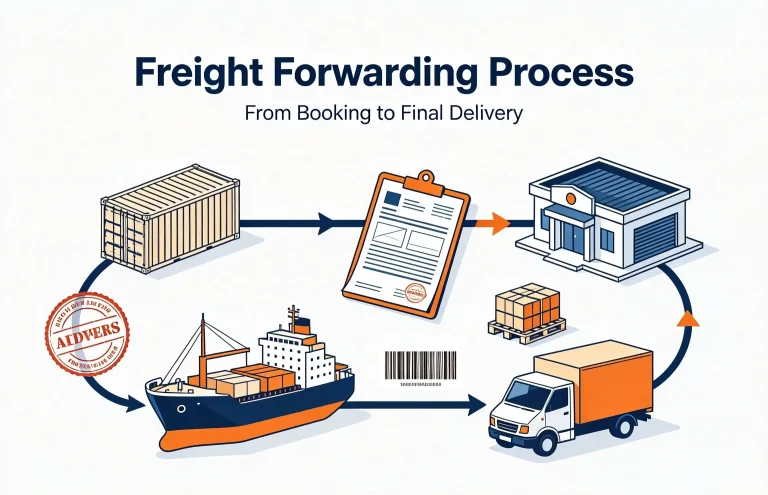
The importer is responsible for the accuracy of the import declaration, whether the importer lodges it or appoints a licensed customs broker. The Australian Border Force import declaration guidance states that an Import Declaration describes the goods, importer, transport, tariff classification and customs value.
- Confirm the importer and cargo details. Establish the Australian importer, supplier, product description, material, quantity, value, country of origin and transport method.
- Check restrictions and product requirements. Determine whether permits, approvals, standards evidence or biosecurity conditions apply before the goods are shipped.
- Prepare consistent commercial and transport documents. Product descriptions, quantities, values, package counts and parties should align across the invoice, packing list and transport document.
- Lodge the appropriate declaration. Goods over AUD 1,000 being entered for home consumption generally require an N10 Import Declaration. Different pathways apply to lower-value consignments, warehoused goods and some restricted goods.
- Respond to any query, hold or direction. ABF or DAFF may request documents, direct an inspection or require further action.
- Complete the remaining release steps. After regulatory releases, the shipment may still need shipping-line release, terminal or depot availability, unpacking and a delivery booking.
Australian Border Force and Biosecurity Are Different
| Area | Australian Border Force | DAFF biosecurity |
|---|---|---|
| Main focus | Customs declaration, tariff classification, customs value, duties, taxes, prohibited or restricted imports and border enforcement | Pests, diseases, contamination, timber and plant or animal material, packaging and commodity-specific import conditions |
| Core importer question | Have the goods been correctly described, valued, classified and declared? | Do the goods and packaging meet the applicable BICON conditions and documentary requirements? |
| Possible action | Document query, duty or tax assessment, hold, examination or request for supporting evidence | Document assessment, inspection, treatment, export or disposal direction where requirements are not met |
| Release meaning | Released from customs control | Released from biosecurity control |
DAFF explains that many goods can be assessed from documents, while some must also undergo inspection. Importers should provide the required documents and meet the conditions in BICON. A consignment released after document assessment may still be selected for Cargo Compliance Verification. See the official clearance and inspection guidance.
Documents Importers Commonly Need
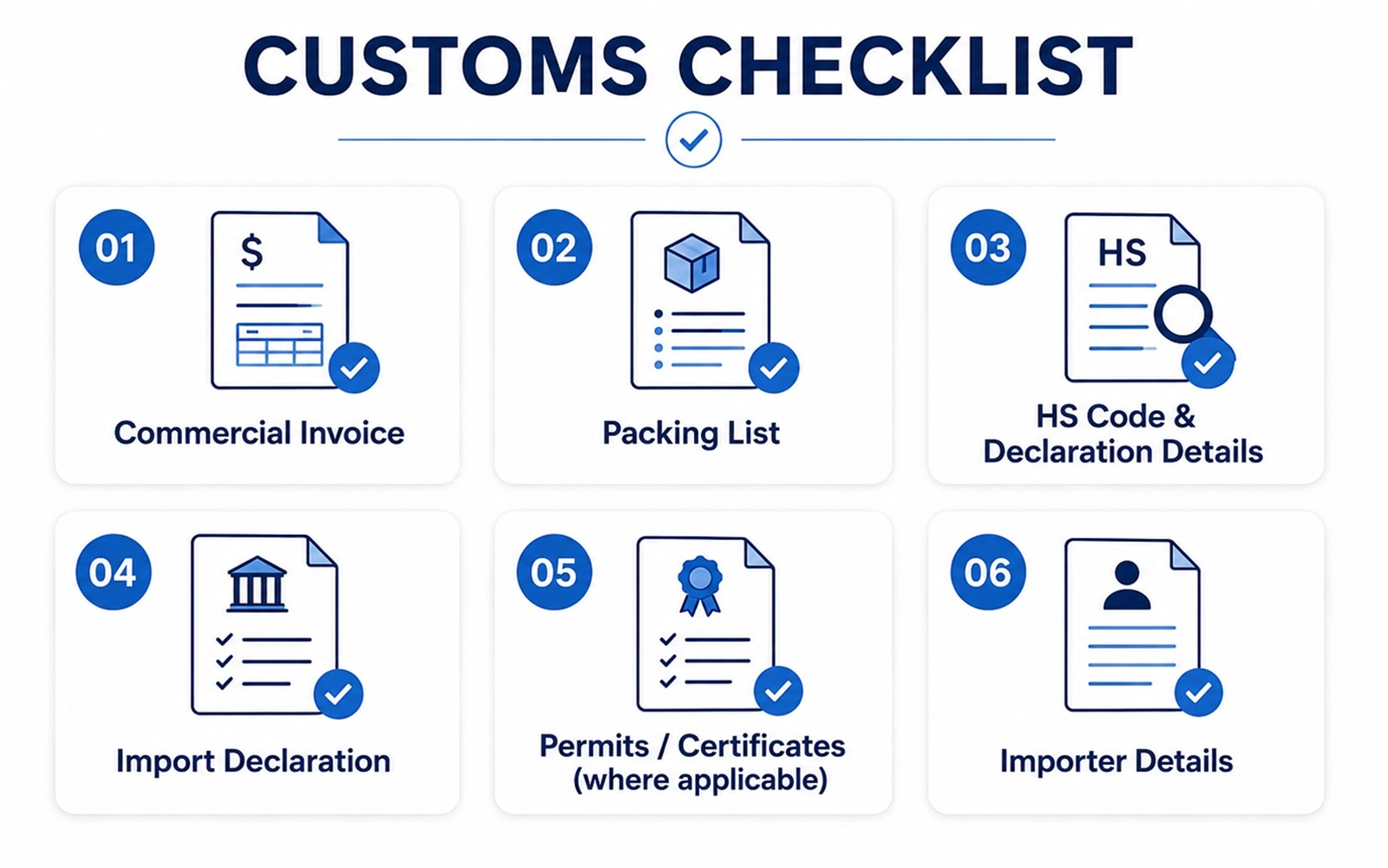
The exact documents depend on the goods and import pathway, but the following set is a practical starting point:
- Commercial invoice: seller and buyer details, specific product descriptions, quantities, unit and total values, currency and agreed terms.
- Packing list: package count, contents, gross and net weight, dimensions and marks.
- Bill of lading or air waybill: transport parties, routing, packages and shipment references.
- Import declaration information: importer identity, tariff classification, customs value, origin and transport details.
- Origin evidence: where a preferential tariff claim or other origin-dependent treatment is being considered.
- Permits, approvals or product documents: where required for restricted goods, regulated equipment, food, chemicals or other controlled products.
- Biosecurity evidence: treatment certificates, packing declarations, manufacturer declarations or other documents required by the relevant BICON case.
- Supporting commercial records: purchase orders, contracts, payment evidence, catalogues, product photos or material specifications if requested.
DAFF’s documentary requirements support its assessment of commodity and non-commodity biosecurity risks. A clean document set should be prepared before arrival rather than assembled only after a direction is issued.
Duties, GST and Import Charges
There is no universal customs duty rate for goods imported from China. The duty outcome depends on the Australian tariff classification, customs value, origin and any applicable concession or preferential treatment. ABF states that imported goods require classification under the Customs Tariff Act 1995, and importers must self-assess the correct classification. Use the current Working Tariff and obtain professional advice where the classification is uncertain.
For taxable importations, GST is generally 10% of the value of the taxable importation. That value includes the customs value, customs duty, international transport and insurance to the place of consignment in Australia, and wine tax where applicable. The Australian Taxation Office import GST guidance also explains that eligible GST-registered importers may apply to defer GST through the Deferred GST Scheme.
Importers should budget beyond duty and GST. Depending on the shipment, costs can include the import processing charge, customs broker services, biosecurity assessment or inspection, treatment, terminal or depot handling, storage, detention, unpacking, warehousing and final delivery. A supplier’s CIF price does not automatically include these Australian destination costs.
What Can Trigger Additional Checks or Holds?
ABF and DAFF use their own regulatory and risk-assessment processes. No forwarder can guarantee that cargo will not be selected. Practical issues that can lead to questions or further assessment include:
- vague or inconsistent product descriptions;
- quantities, values, weights or package counts that do not align;
- an incorrect or unsupported tariff or origin claim;
- missing permits, declarations or treatment evidence;
- goods or packaging containing timber, bamboo, plant, animal or food material;
- soil, bark, seeds, insects or other contamination;
- cargo selected through a government compliance or verification program.
A hold does not by itself prove that the declaration is wrong. It means the relevant authority requires the stated assessment, evidence or inspection before it can release the goods.
Biosecurity Risks for Imports From China
Australian biosecurity requirements apply according to the goods, materials, packaging and contamination risk. Furniture, cabinets, timber products, bamboo, natural fibres, food, plant and animal products can require additional attention, but packaging can create a risk even when the product itself is not regulated.
DAFF states that solid-timber packaging and dunnage must be treated and declared. It should meet ISPM 15 bark-tolerance and treatment requirements or the applicable BICON offshore-treatment conditions. Plywood and reconstituted wood can fall into lower-risk categories when sufficiently processed, but packaging must still be clean and free of solid wood, unprocessed bamboo, bark and soil. Check the current timber and bamboo packaging requirements before loading.
Importers should also inspect the empty container and cargo before sealing. Clean floors, packaging and products reduce preventable contamination issues, but visual cleanliness does not replace a required treatment, declaration or permit.
BMSB Requirements for the 2026–27 Season
The 2026–27 Brown marmorated stink bug risk season runs from 1 September 2026 to 30 April 2027 inclusive. DAFF applies seasonal measures to targeted goods manufactured in or shipped from target risk countries during the risk period, and to relevant vessel movements.
China is identified as an emerging-risk country for the 2026–27 season and is listed for heightened vessel surveillance only. DAFF states that goods shipped from China during the season may be selected for random onshore inspection; for emerging-risk countries, this includes target high-risk goods and goods in tariff chapters 39, 94 and 95. This does not mean that every shipment from China requires BMSB treatment.
Importers should check the current DAFF BMSB seasonal measures, the relevant tariff chapter, country of manufacture, shipping dates, routing and BICON conditions before shipment. The department’s 2026–27 commencement notice records the season start and current policy changes.
Customs Released Does Not Always Mean Ready for Delivery
Importers often receive one positive status and assume the freight can be delivered. In practice, several milestones may need to be completed independently:
- Customs status: ABF requirements, duty, GST and customs control.
- Biosecurity status: DAFF document assessment, inspection or treatment directions.
- Shipping-line release: freight and destination charges, original or electronic release requirements and the delivery order.
- Cargo availability: discharge, terminal availability, depot transfer or LCL unpack completion.
- Delivery readiness: transport slot, warehouse capacity, site access and unloading arrangements.
A shipment may have customs release while still waiting for biosecurity clearance, a delivery order, unpacking or an available collection slot. Track each milestone by owner and status rather than describing every delay as “customs”.
Real Logistics Example: Sydney Cabinet and Timber Shipment
In an Austone-managed historical FCL shipment, cabinets and other timber products arrived in Sydney on 30 July. The shipping line’s payment record first needed correction before the electronic delivery order was released. The Border Hold was released on 7 August, the biosecurity unpack inspection was completed and passed on 14 August, and the empty container was returned on 17 August.
The arrival-to-container-return process took 18 days. The supplied case record noted an approximate 11-day delay against the expected process and two days of storage charges. The example shows why customs status, biosecurity inspection, shipping-line documentation, storage exposure and container return should be managed as separate operational milestones. It is a historical shipment outcome, not a promise of timing or clearance for another import.
How Importers Can Reduce Avoidable Delays
- Describe the product precisely. State what it is, what it is made from and how it will be used. Avoid generic descriptions such as “parts”, “samples” or “furniture”.
- Check classification before quoting landed cost. Do not automatically copy a supplier’s China export HS code into the Australian declaration.
- Align every document. Product names, quantities, package counts, weights, values and parties should be consistent.
- Check BICON and product rules early. Permits or treatment arranged after arrival can cause delay and extra handling.
- Control timber packaging. Confirm the actual packaging material, treatment, marks and packing declaration before loading.
- Send documents before arrival. Give the broker time to review questions while the cargo is still in transit.
- Budget for destination contingencies. Include inspection, storage, unpacking and delivery dependencies in the plan.
- Keep suppliers available. Fast access to product photos, material statements and corrected commercial documents can matter when an authority asks a question.
Austone can coordinate China-side supplier information, freight documents and destination handover with the appointed Australian customs broker. Learn more about customs clearance support in Australia and the wider China-to-Australia shipping process.

Pre-Shipment Customs and Biosecurity Checklist
| Check | Questions to confirm before departure |
|---|---|
| Importer | Is the correct Australian entity named, and are its ABN and contact details accurate? |
| Product | Are the description, material, function, model and quantity specific and consistent? |
| Classification and origin | Has the Australian tariff classification been reviewed? Is any origin claim supported? |
| Commercial documents | Do the invoice and packing list agree on quantities, values, weights and packages? |
| Transport document | Do shipper, consignee, notify party, package and routing details match the plan? |
| Restrictions | Are permits, approvals, standards evidence or product-specific documents required? |
| Biosecurity | Have BICON conditions been checked for the goods and non-commodity concerns? |
| Packaging | Is timber or bamboo packaging declared, treated and marked where required? |
| BMSB | Do the season, country, tariff chapter, manufacture and routing create a current measure? |
| Destination plan | Who tracks customs, biosecurity, shipping-line release, availability and delivery? |
Frequently Asked Questions
Do all imports from China need an Import Declaration?
No. ABF states that consignments valued above AUD 1,000 and cleared into home consumption generally require an N10 Import Declaration. Lower-value cargo can follow a SAC pathway, but restricted goods, permits and special categories can change the required process.
Is customs clearance the same as biosecurity clearance?
No. ABF administers customs control, while DAFF administers biosecurity controls. A shipment may be released by one authority and still be held by the other.
How much customs duty applies to imports from China?
There is no single rate for all goods. Duty depends on the Australian tariff classification, customs value, origin and any applicable concession or preferential treatment. Confirm the current Working Tariff and supporting origin evidence.
How is import GST calculated?
GST on a taxable importation is generally 10% of the value of the taxable importation, which includes customs value, duty, relevant international transport and insurance, and wine tax where applicable.
Does every shipment from China need BMSB treatment?
No. For 2026–27, China is an emerging-risk country and subject to heightened vessel surveillance and possible random onshore inspections for specified goods during the season. Treatment requirements must be determined from the current DAFF measures and BICON conditions for the specific shipment.
What happens if timber packaging is not compliant?
DAFF may direct treatment, export or disposal at the importer’s expense, depending on the packaging and applicable import conditions. Confirm solid-timber treatment and acceptable marks before loading.
Can a shipment be delivered immediately after customs release?
Not always. Biosecurity release, shipping-line release, terminal or depot availability, unpacking and delivery scheduling may still be outstanding.
Can accurate documents guarantee no inspection?
No. Government agencies can select cargo for assessment or inspection. Accurate and complete documents reduce avoidable discrepancies and help the response process, but they do not guarantee release without intervention.
Plan the Clearance Process Before Cargo Leaves China
Australian import clearance works best when customs, biosecurity and delivery preparation begin before departure. Austone supports China-side document coordination, international freight, customs and biosecurity handover, warehousing and delivery planning for Australian importers. Product compliance remains product-specific; for electrical and lighting cargo, review the separate guide to RCM and SAA considerations for lighting imports. If cargo needs to be held or distributed after release, see Austone’s Australian 3PL warehousing services.
How Austone supports your shipping plan
We support your international cargo with a clear plan: route and mode advice, document and customs support, then arrival and delivery coordination.
- PlanRoute, mode and timing based on your cargo and deadline.
- ClearDocuments, customs and release coordinated around your shipment requirements.
- DeliverArrival, warehouse and final-mile visibility after the vessel or flight.
Get a shipping quote
Tell us the cargo, route and deadline. We will reply with a clear next step.