Bonded Zone Same-Day Round Trip for China Export Tax Rebates
Learn how a bonded-zone same-day export and re-import can help multi-supplier manufacturers in China preserve export tax rebate eligibility before final assembly, with a real Austone case.
Guide Overview
- Route
- China domestic bonded-zone transfer
- Suitable For
- Australian importers using multiple China suppliers
- Shipping Modes
- Supervised bonded-zone vehicle transfer
- Main Topics
- Export tax rebates, bonded trade, documents, compliance
When components from several Chinese suppliers must go to one factory for final assembly, an upstream supplier may lose its intended export tax rebate route if its goods are incorporated into the finished product before an export declaration is completed. A bonded-zone same-day round trip can provide a compliant export-and-re-import structure before assembly, subject to the applicable customs, tax and processing-trade requirements.
This guide explains the decision logic, documents, operational sequence and compliance controls involved. It also uses a June 2026 Austone lighting-industry case to show how the process worked in practice. The case data is shipment-specific and should not be treated as a universal customs model or tariff classification.
Key Takeaways
- A bonded-zone same-day round trip can separate the upstream supplier’s export step from the downstream factory’s assembly step.
- The downstream factory normally needs a valid processing trade manual or electronic ledger for the bonded-import model.
- Contracts, goods, funds and invoices must reflect the real transaction and remain consistent.
- HS codes, declaration modes and tax treatment must be confirmed for each shipment; the case examples below are not universal rules.
- In Austone’s June 2026 case, pickup began at about 14:00 and delivery to the assembly factory was completed at about 17:30 after advance compliance preparation.
The Multi-Supplier Assembly Problem
Consider an Australian importer sourcing a finished product from three Chinese suppliers. Suppliers A and B manufacture components, while Supplier C receives those parts and assembles the finished product for export.
If Supplier A sends its components directly to Supplier C as a domestic delivery and the parts are incorporated into a finished product before the relevant export step, Supplier A’s components may no longer be separately identifiable for its intended export declaration and rebate process. The finished article is then declared according to its own classification and transaction structure.
The bonded-zone approach addresses this timing problem. Supplier A’s goods enter a customs-supervised area and complete the applicable export-side procedures while still identifiable. The downstream factory then receives the goods through an appropriate bonded-import structure before assembly.
What Is a Bonded-Zone Same-Day Round Trip?
A bonded-zone same-day round trip is an operational structure in which eligible goods enter a special customs supervision area under an export declaration, pass through the required in-zone transaction and customs procedures, and then leave the zone under a bonded-import or other applicable model for delivery to a downstream factory in China.
China’s rules distinguish comprehensive bonded zones and other special customs supervision areas from ordinary domestic circulation. Goods moving between a comprehensive bonded zone and the rest of China must complete the applicable customs procedures. Eligibility for export tax treatment depends on the type of zone, the goods, the parties and the current tax rules, so the precise structure must be checked before cargo moves.
| Stage | Commercial Purpose | Key Control |
|---|---|---|
| Export into the zone | Complete the upstream supplier’s applicable export-side procedure before assembly | Goods, declaration elements and supporting documents must match |
| In-zone transaction | Reflect the genuine ownership and transaction structure used in the zone | Contracts, invoices, funds and goods movement must be traceable |
| Bonded exit from the zone | Allow the downstream factory to receive materials for processing or assembly | The receiving factory needs the appropriate processing-trade records |
| Final export and reconciliation | Export the finished product and close the relevant processing-trade records | Quantities, consumption and declarations must reconcile |
When This Structure May Be Relevant
- Several Chinese suppliers provide components to one final assembly factory.
- An upstream supplier needs an eligible export event before its goods are combined or processed.
- A downstream factory needs materials to arrive under a valid processing trade manual or electronic ledger.
- A factory relocation or handover creates a mismatch between old and new processing-trade records.
- The parties need a controlled way to reconcile bonded materials before final export.
The structure is not automatically suitable for every multi-supplier transaction. Product restrictions, zone eligibility, tax status, customs classification, certificates, the actual trading parties and the downstream factory’s records all affect feasibility.
Real Austone Case: Three Suppliers and One Assembly Factory
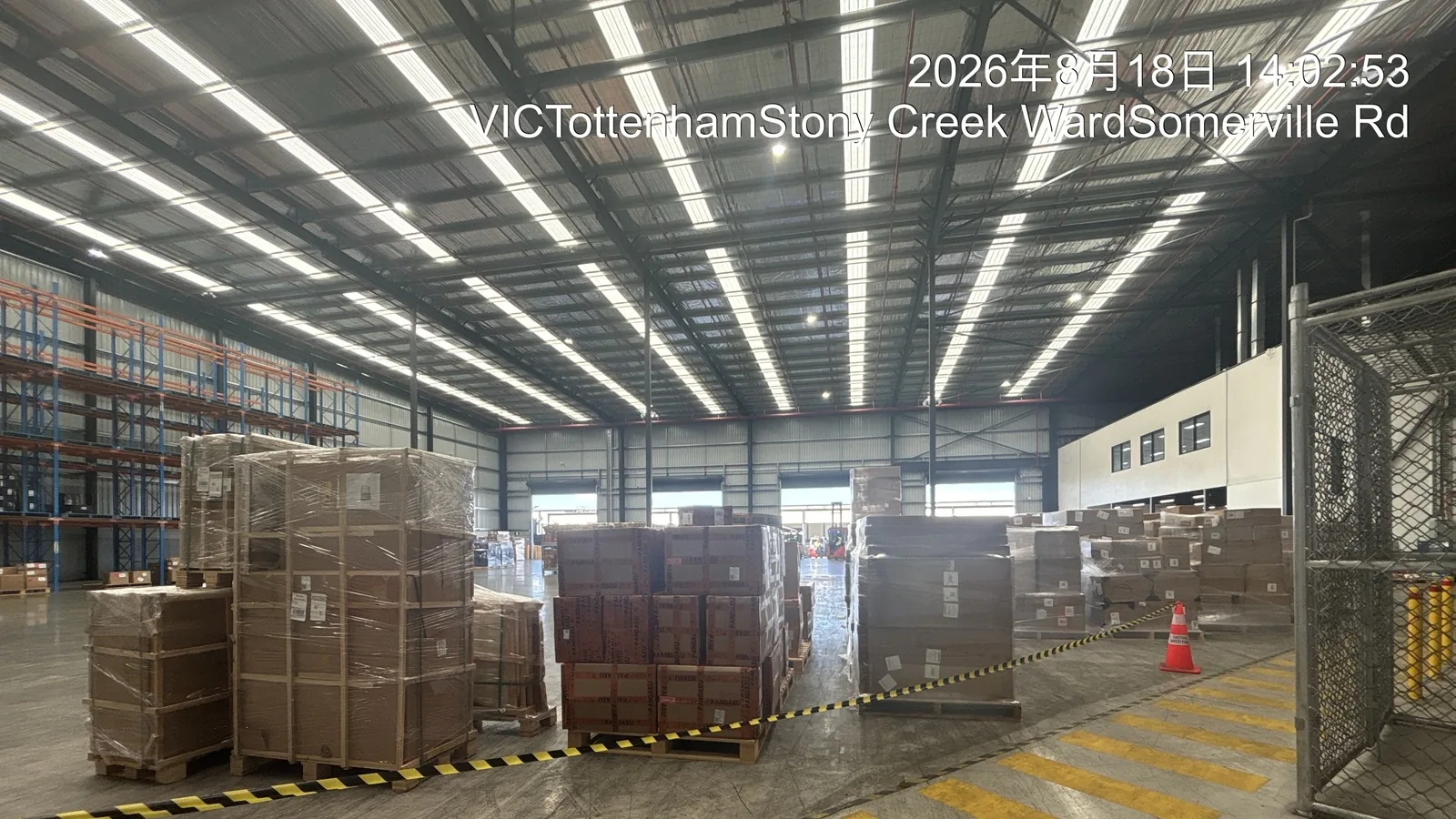
In June 2026, Austone coordinated a bonded-zone movement for an Australian lighting importer working with Suppliers A, B and C in China. Suppliers A and B produced components, and Supplier C was responsible for final assembly.
The shipment value was approximately RMB 800,000, and the potential export tax rebate impact exceeded RMB 100,000. Suppliers A and B therefore needed the relevant export-side procedures completed before their components were delivered to Supplier C and incorporated into finished lighting products.
How the Movement Was Structured
Austone arranged for the components from Suppliers A and B to enter the local bonded zone first. For the relevant goods in this shipment, the export declaration used Customs Mode 0110 (General Trade Export). Supplier C held a valid processing trade manual or electronic ledger and received the goods through the corresponding bonded-import process for subsequent assembly.
An in-zone entity formed part of the actual transaction and declaration structure. One product in the shipment was an LED lighting component described as a waterproof connector. The actual declaration used HS code 9405990000.
HS code 9405990000 and Customs Mode 0110 are records from this specific Austone shipment. They are not universal classifications or supervision modes for every bonded-zone transaction.
On 22 June 2026, pickup from Suppliers A and B began at approximately 14:00. By approximately 17:30, the goods had reached Supplier C after completing the planned bonded-zone process. The physical movement took about three and a half hours that afternoon because the document and compliance work had been prepared in advance.
Outcome for the Importer and Suppliers
The structure resolved a commercial deadlock. Supplier C received the components needed for assembly, while Suppliers A and B completed the required export-side procedures before their goods were incorporated into the finished products. Supplier C could then assemble the goods and proceed with the subsequent formal export and processing-trade reconciliation.
Documents to Prepare Before the Same-Day Operation
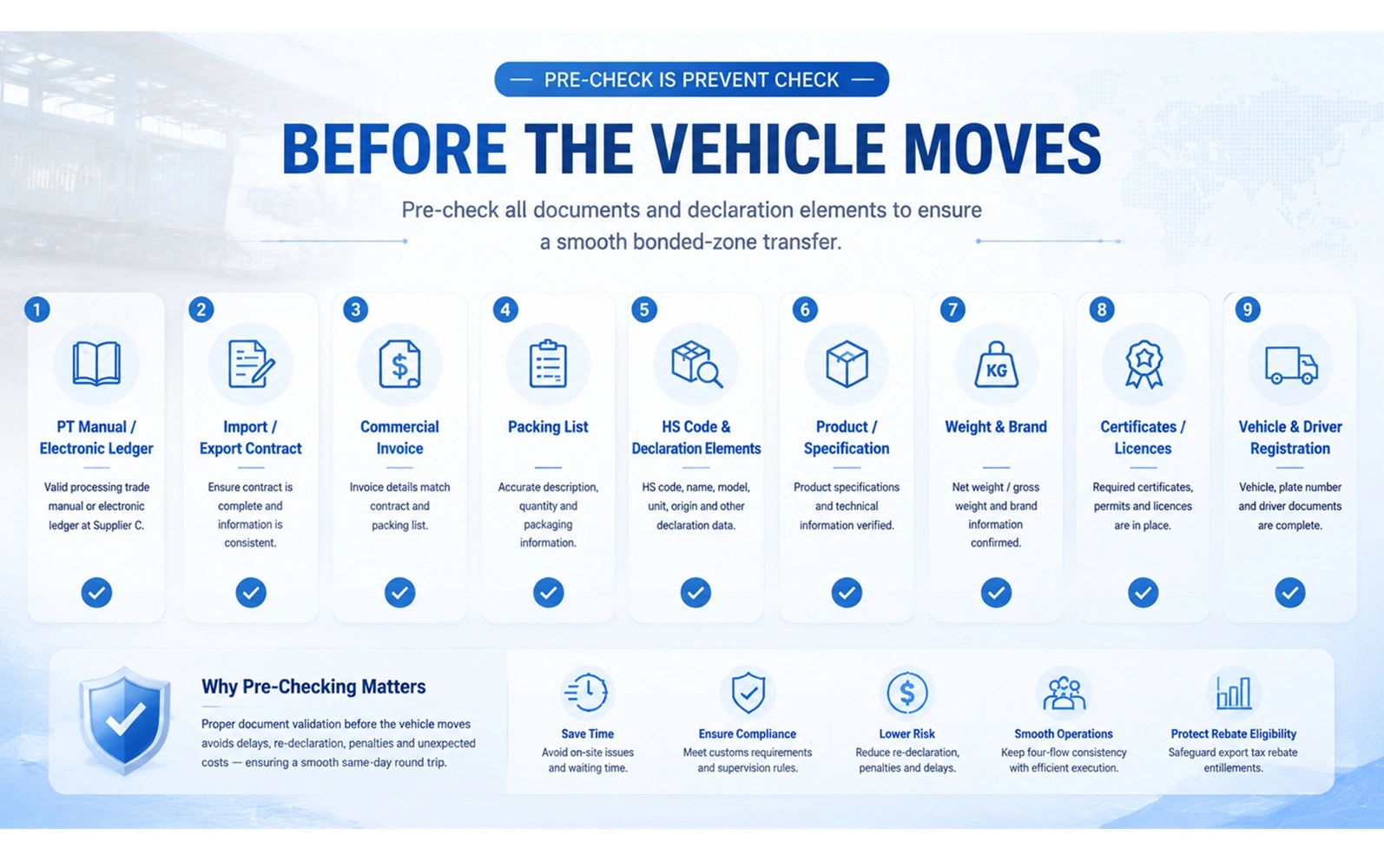
Preparation should ideally be completed at least one business day before the vehicle moves. The exact document set depends on the product, zone and transaction, but the following checks are typically required.
| Check | Documents or Data | Why It Matters |
|---|---|---|
| Company and record status | Processing trade manual or electronic ledger; participating entity status | Confirms that the parties can use the intended customs structure |
| Commercial records | Contracts, commercial invoices, packing lists and authorization documents | Supports a genuine and traceable transaction |
| Declaration data | Product name, specification, HS code, quantity, weight, brand and value | Reduces mismatches between cargo and customs entries |
| Product controls | Certificates, licences or inspection documents where applicable | Prevents regulated goods from arriving without required evidence |
| Vehicle information | Supervised-vehicle registration, driver details and tare weight | Allows the physical movement to match the approved plan |
The Same-Day Bonded-Zone Process
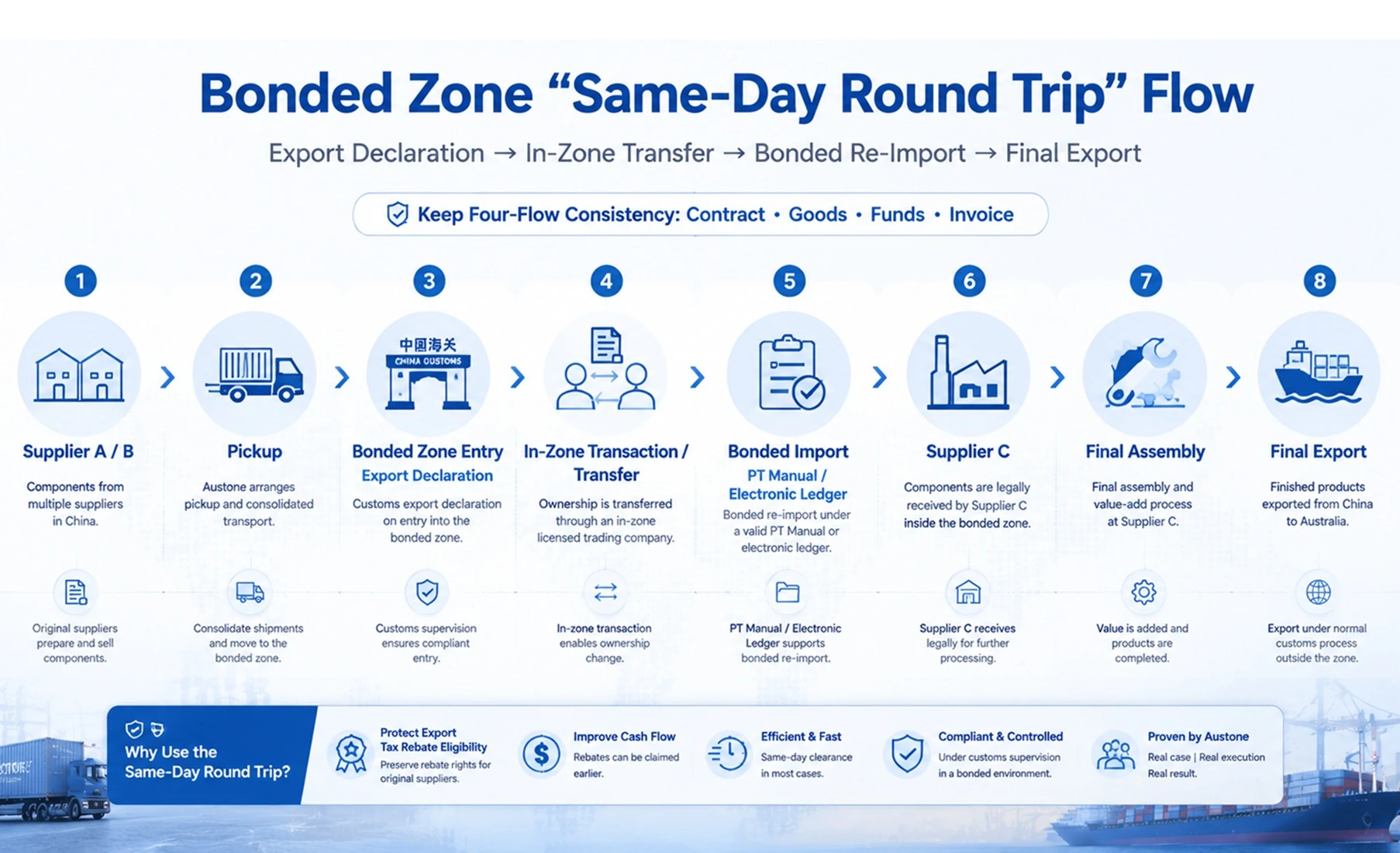
Step 1: Confirm the Transaction Structure
Identify the upstream exporter, in-zone participant, downstream receiving factory and overseas customer. Confirm how ownership, invoices and funds will move. The documents should describe the actual commercial arrangement rather than a paper-only structure.
Step 2: Validate Customs and Product Data
Check the product descriptions, specifications, quantities, weights, brands, HS classifications and required certificates. Corresponding entries should be correctly mapped to the actual goods and processing-trade records. Do not assume that every entry must use the same HS code in every processing-trade structure.
Step 3: Export the Goods Into the Zone
The supervised vehicle enters the designated customs area, and the goods are checked against the prepared declaration. Where all relevant customs and tax conditions are met, the upstream supplier can use the applicable export documentation for its export-tax process.
Step 4: Complete the Genuine In-Zone Transaction
The in-zone transaction, ownership transfer and related records must follow the applicable operating model. Contracts, invoices, goods movement and funds flow should remain consistent and traceable.
Step 5: Arrange the Bonded Import
The downstream factory receives the goods under its valid processing trade manual or electronic ledger when the bonded model applies. If a general-trade import model is used instead, normal duty and import-tax treatment may apply. The correct option must be confirmed before declaration.
Step 6: Retain Records and Reconcile
The upstream supplier retains the documents needed for its tax process. The downstream factory records the bonded materials, completes final assembly and reconciles the finished export against its processing-trade records. Declaration numbers, quantities, timing and record status should be maintained in a dedicated operational ledger.
Critical Compliance Requirements
| Requirement | Operational Standard | Main Risk if Missed |
|---|---|---|
| Genuine trade | No paper-only transaction, fabricated trade or circular funds flow | Customs, tax and legal exposure |
| Four-flow consistency | Contracts, goods, funds and invoices reflect the same real transaction | Questions during clearance, rebate review or audit |
| Classification and records | HS codes and declaration elements are correctly mapped to the goods and processing records | Misdeclaration, inspection or reconciliation problems |
| Weight control | Declared and measured weight remain within the applicable tolerance | Inspection or delayed release |
| Product controls | Required licences and certificates are ready before movement | Cargo hold or inability to use the intended structure |
| Audit trail | Each declaration, movement, invoice and reconciliation status is retained | Difficulty proving compliance after the transaction |
Repeated identical transactions and unusual funds flows can attract additional scrutiny. A workable bonded-zone process therefore depends on genuine commercial substance, accurate data and consistent records—not only fast transport.
How Austone Can Support the Operation
Austone can coordinate the operational work around a bonded-zone same-day movement, including pre-shipment document checks, declaration-data coordination, supervised-vehicle scheduling, movement planning and record tracking. The exact customs and tax structure should be confirmed with the responsible customs broker, tax adviser and participating enterprises before cargo is dispatched.
Importers may also benefit from Austone’s customs clearance support and China sourcing and inspection services when the broader supply chain involves multiple factories, product verification and final delivery to Australia.
Frequently Asked Questions
Why can’t the upstream supplier claim its rebate after the assembly factory exports the finished product?
Once the components are incorporated into a finished product, they may no longer be exported as the upstream supplier’s separately identifiable goods. The finished product has its own classification and transaction structure. The applicable treatment must be assessed for the specific arrangement.
Does the downstream factory need a processing trade manual?
A valid processing trade manual or electronic ledger is normally required when the downstream factory receives the goods under a bonded-import processing model. Its scope must cover the relevant materials and finished products.
Does every bonded-zone transaction use Customs Mode 0110?
No. Customs Mode 0110 was used in the June 2026 Austone case described above. The appropriate customs supervision mode depends on the actual goods, transaction and records for each shipment.
Must the export and import entries use the same HS code?
Not necessarily. The codes and declaration elements must be correctly mapped to the actual goods, transaction structure and processing-trade records. Classification should be confirmed for each entry rather than copied automatically.
Can the process always be completed within one day?
No time is guaranteed. A same-day movement is possible when the structure is eligible, documents are complete, declarations are accepted and no inspection or system issue intervenes. Austone’s June 2026 case took approximately three and a half hours from pickup to downstream delivery.
Is a bonded-zone same-day round trip suitable for every multi-supplier order?
No. Suitability depends on the zone, parties, goods, licences, tax treatment and the downstream factory’s processing-trade records. The structure should be reviewed before suppliers dispatch cargo.
Plan the Structure Before the Cargo Moves
A bonded-zone same-day round trip can solve a specific multi-supplier manufacturing problem: the upstream supplier needs an eligible export step before its components are assembled, while the downstream factory needs to receive those materials under an appropriate customs structure.
The decisive work happens before pickup. Confirm the parties, tax treatment, processing-trade records, customs classifications, documents and vehicle plan first. If your China suppliers feed components into one assembly factory, contact Austone for a shipment review before committing to the movement.
How Austone supports your shipping plan
We support your international cargo with a clear plan: route and mode advice, document and customs support, then arrival and delivery coordination.
- PlanRoute, mode and timing based on your cargo and deadline.
- ClearDocuments, customs and release coordinated around your shipment requirements.
- DeliverArrival, warehouse and final-mile visibility after the vessel or flight.
Get a shipping quote
Tell us the cargo, route and deadline. We will reply with a clear next step.