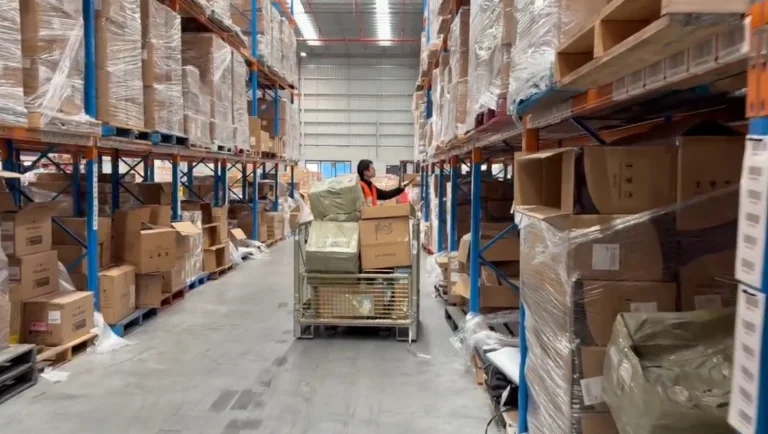
Shipping a Full-Villa Furniture Order from Guangdong to Melbourne: A Real LCL Case Study
A real Guangdong-to-Melbourne furniture shipment involving 56 pieces, 25.675 CBM and multiple suppliers. See how Austone managed repacking, an inspection delay, clearance, delivery and installation.
A Melbourne customer needed a mixed, whole-villa furniture order shipped from Guangdong and delivered to a residential property before Christmas 2025. The shipment contained 56 pieces weighing 2,175 kg and measuring 25.675 CBM, including irregular and heavy items from multiple suppliers.
When the cargo reached the warehouse, parts of the original timber packaging were mouldy, dirty or contained bark. Austone arranged replacement pallets and timber frames, recounted and classified the cargo, and selected an LCL sea-freight plan suited to residential delivery. Although an export inspection delayed the sailing by 14 days, the shipment arrived in Melbourne on 7 December 2025. Clearance processing was completed on 9 December, and the residential delivery and furniture installation were completed on 15 December, allowing the customer to receive the order before Christmas.
Case Study at a Glance
| Item | Shipment details |
|---|---|
| Route | Guangdong, China to Melbourne, Australia |
| Cargo | Whole-villa furniture, lighting and selected household goods |
| Furniture examples | Sofa, round dining table, coffee table, beds, wardrobes and other mixed pieces |
| Shipment size | 56 pieces; 2,175 kg; 25.675 CBM |
| Shipping mode | Sea freight using an LCL/consolidated-container solution |
| Supplier profile | Multiple suppliers, including items purchased through Taobao |
| Special cargo | Irregular pieces, marble, timber crates and frames, items up to 2.36 m long, and one pallet weighing more than 500 kg |
| Destination service | Customs coordination, container collection, unpacking, residential delivery, furniture placement and installation, and packaging-waste removal |
| Main disruption | Export inspection caused a 14-day sailing delay |
| Destination result | Arrived in Melbourne on 7 December 2025; clearance processing completed on 9 December; residential delivery and installation completed on 15 December, before Christmas |
The Customer’s Requirement
The customer was referred by an existing client and first contacted Austone on 15 September 2025. The scope was broader than port-to-port freight: the customer needed sea freight from Guangdong, delivery to a Melbourne villa, furniture installation and removal of packaging waste.
Timing was critical. The customer’s rental property was due to end on 3 December, and the family planned to return to China for Christmas. They originally wanted the furniture delivered by 28 November so they could move into the new home before travelling.
The customer was particularly concerned about cargo damage, customs clearance and missing items. Those concerns were reasonable because the order combined goods from several suppliers, included irregular and heavy furniture, and arrived with inconsistent product information and packaging.
Why Austone Recommended LCL Instead of a Full Container
The cargo measured 25.675 CBM, but container selection could not be based on CBM alone. Many pieces were packed in irregular timber crates and frames. Their shapes, loading angles and the unavoidable gaps between packages reduced the usable space inside a container, creating a real risk that a smaller container, such as a 20GP, would not accommodate the complete order.
The delivery address was a residential villa. Based on the local access requirements identified for this delivery, trailers and other large commercial vehicles could not enter the residential area as part of a routine delivery. Special approval from the relevant local authority would have been required, adding lead time and administrative complexity.
If a full container could not be delivered directly to the property, it would first need to be moved to a local bonded warehouse for devanning. The furniture would then need to be transferred to smaller delivery vehicles and delivered as individual pieces. That alternative would add bonded-warehouse handling, devanning and final-delivery costs to the FCL plan.
Austone therefore recommended an LCL/consolidated-container solution. The cargo could be unpacked through the bonded warehouse and organised for residential delivery, furniture placement and installation without requiring the customer to receive and unload a full container at the villa.
| Decision factor | FCL option | Selected LCL solution |
|---|---|---|
| Measured cargo volume | 25.675 CBM appeared close to a smaller-container decision, but CBM alone did not prove the cargo would fit | The shipment could be handled as consolidated cargo based on the actual packages |
| Usable loading space | Irregular timber crates, frames and loading angles created unused gaps and a risk that a 20GP would be too small | Did not require the customer to commit to a smaller full container before the real stowage outcome was known |
| Residential access | Direct trailer access was not routinely available at the villa; special local approval would have added complexity | Furniture could be transferred to suitable local delivery vehicles after devanning |
| Fallback if the container could not enter | The container would need bonded-warehouse devanning followed by separate residential delivery, adding handling and delivery costs | Devanning and individual-piece delivery were incorporated into the selected operating plan |
| Final delivery requirement | The customer would still need a practical unloading, placement and installation solution | Better aligned with residential delivery, furniture placement, installation and packaging-waste removal |
This case does not mean LCL is always better for a 25.675 CBM furniture order. Container choice should be based on actual package geometry and the complete door-to-door plan, including usable stowage space, destination vehicle access, unloading responsibility, warehouse handling and final-delivery costs.
Challenge 1: The Original Packaging Was Not Ready for Shipment
When the cargo arrived at Austone’s warehouse, the team found mould, dirt, bark and unsuitable solid-timber packaging. Some packaging could not be accepted for the planned transport process in its existing condition.
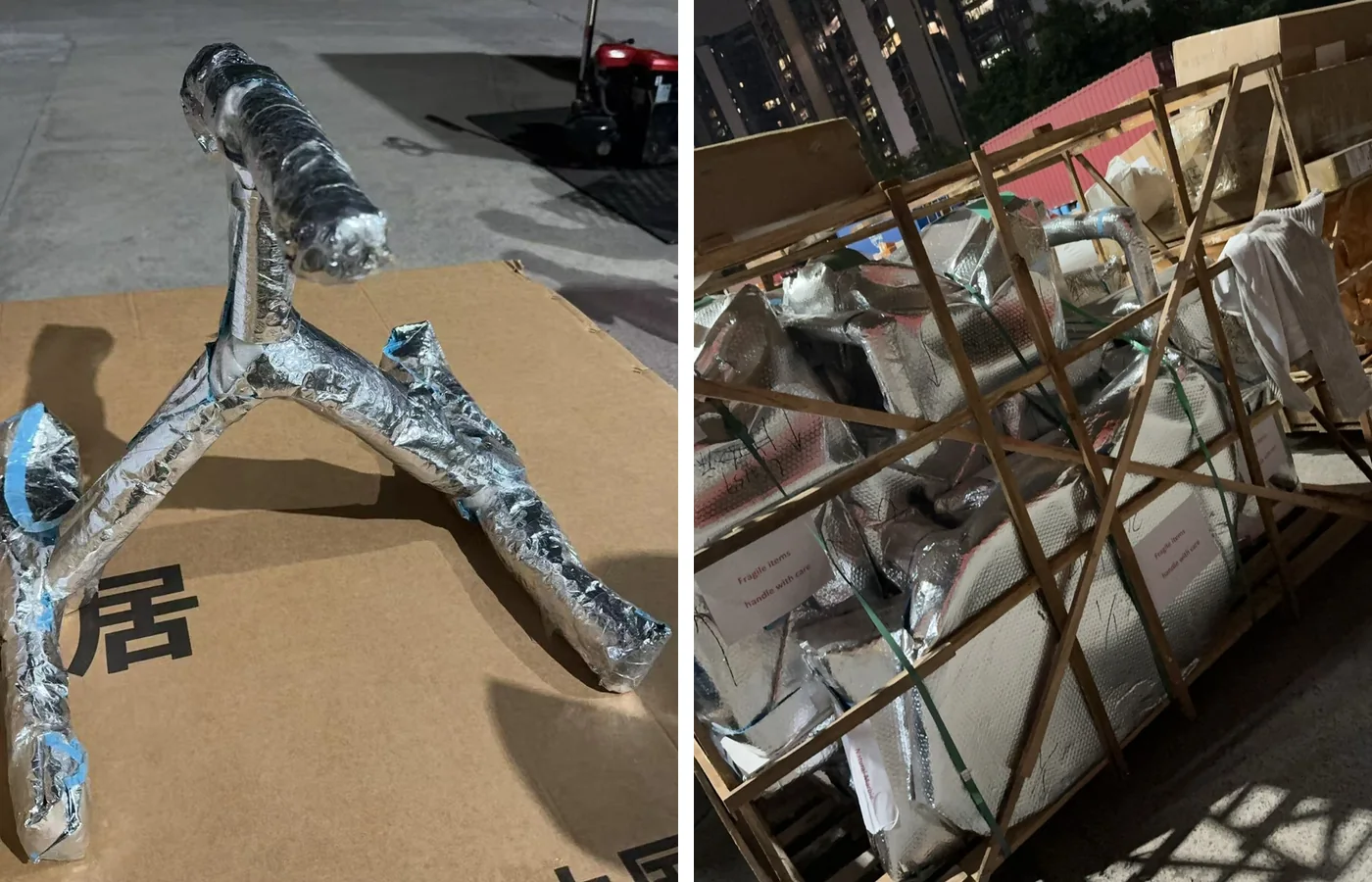
The cargo itself also made repacking difficult. Chairs and sofas had irregular shapes, the longest piece measured 2.36 m, marble required careful handling, and the heaviest pallet exceeded 500 kg.
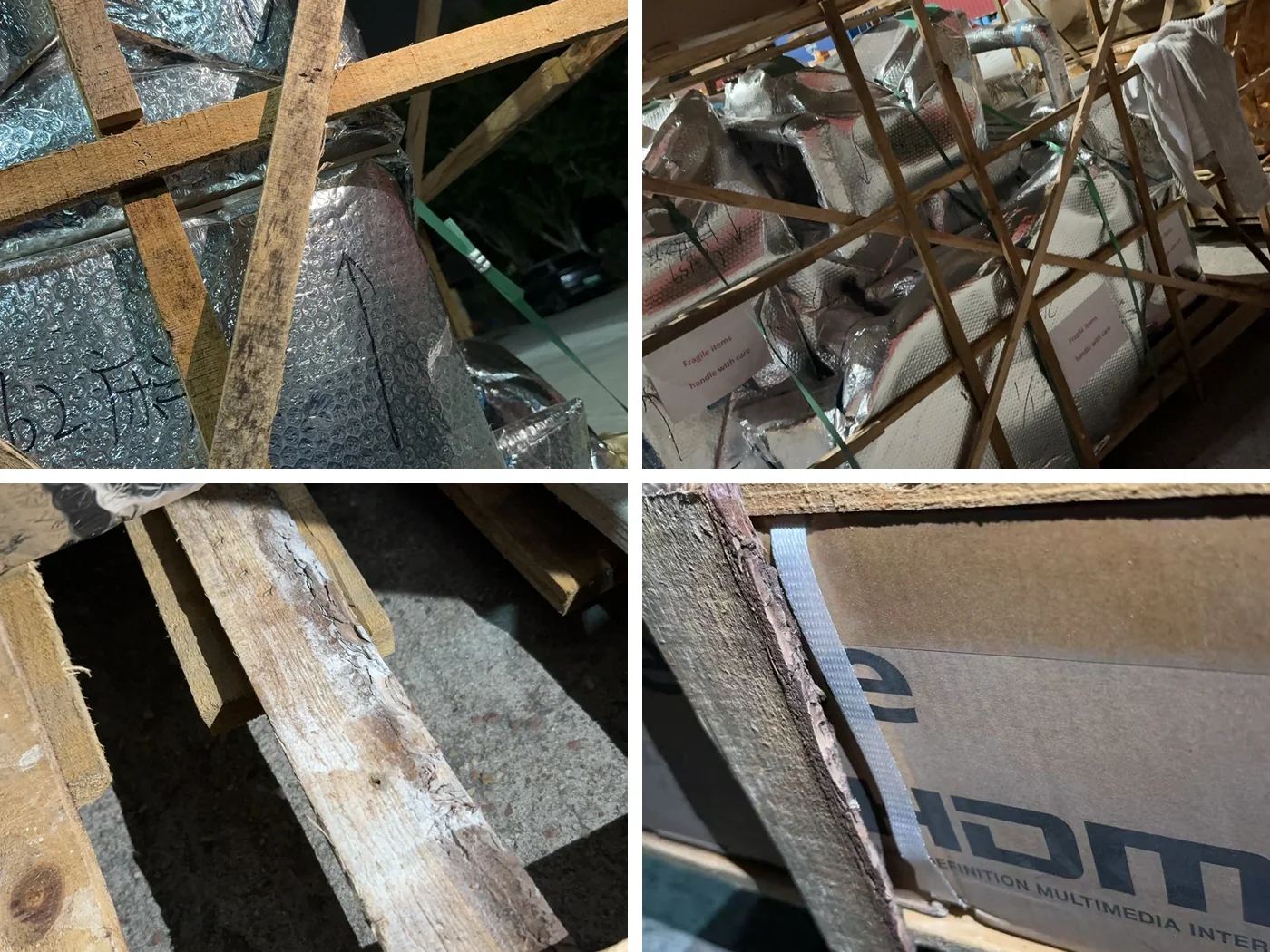
Austone removed the mouldy pallets and unclean timber frames, then arranged new pallets, timber frames and outer protection based on the dimensions and handling needs of the actual items. The team also reclassified and recounted the cargo before shipment.
Because the cargo arrived during the late-October peak season and the timber-packing contractor was already fully booked, Austone assigned staff to remain on site and supervise the repacking work until midnight. This allowed the shipment to remain in contention for the earliest suitable sailing.
Challenge 2: Multiple Suppliers and Incomplete Product Information
The order included furniture from several suppliers and smaller household items purchased through Taobao. The main furniture cargo was delivered to Austone’s warehouse, while Austone received and counted the smaller purchases.
Some parcels had been sent without advance notice, so warehouse staff needed additional time to locate and reconcile them. The commercial-invoice information also contained incomplete or informal descriptions, particularly for materials and quantities.
Austone helped the customer and suppliers correct the invoice information and maintained a physical count of the cargo. Items requiring separate handling, including electrical products and branded printers, were classified and moved in different shipments rather than being combined automatically with the furniture.
Challenge 3: Export Inspection Disrupted the Planned Sailing
The internal plan targeted a COSCO sailing scheduled to depart on 7 November and arrive on 20 November. Austone coordinated with the booking and sea-freight teams to retain space on the earliest suitable Melbourne sailing.
The shipment was then selected for an export inspection. The inspection caused a 14-day sailing delay and made the customer’s original 28 November delivery target impossible. The delay also affected the family’s travel plans and increased the customer’s anxiety about the approaching Christmas shutdown.
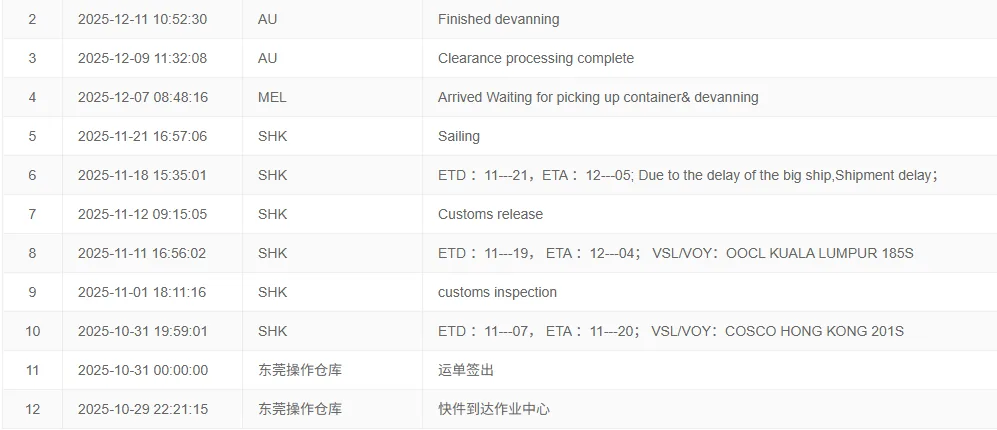
During the disruption, Austone monitored the shipment, explained the latest status and notified the customer as soon as the vessel departed. The team did not promise to recover time that remained outside its control; instead, it prepared the destination operation so the shipment could move quickly after arrival.
How Austone Managed the Shipment
1. Received and Reconciled the Cargo
Austone received the main furniture order and smaller Taobao parcels, counted the available pieces and investigated unannounced packages.
2. Checked Packaging and Shipment Information
The warehouse team reviewed the cargo, packaging, labels and supporting information. It identified mouldy, dirty and bark-containing timber packaging, as well as gaps in the invoice descriptions.
3. Repacked Difficult Furniture
The unsuitable pallets and timber frames were removed. New pallets, timber frames and outer packaging were arranged around the real dimensions, weight and shape of the furniture, including the 2.36 m pieces and pallet weighing more than 500 kg.
4. Separated Cargo Requiring Different Handling
Electrical goods and branded printers were classified separately and assigned to different sailings where required, rather than being placed into the furniture shipment without review.
5. Arranged Sea Freight and Managed the Inspection Delay
Austone coordinated the booking for an early Melbourne sailing, followed the export inspection and kept the customer informed during the resulting 14-day delay.
6. Prepared the Melbourne Destination Operation
The Australian team coordinated customs clearance, container collection, unpacking, local transport, unloading, furniture placement and installation, and removal of packaging waste.
7. Prioritised Delivery Before Christmas
The shipment arrived in Melbourne on 7 December 2025, as truck and delivery capacity was tightening ahead of Christmas. Clearance processing was completed on 9 December. Container collection, unpacking, residential delivery, furniture installation and packaging-waste removal were completed on 15 December.
The Final Result
The export inspection delayed the shipment by 14 days, so the customer did not receive the cargo by the original 28 November target. Austone nevertheless completed the destination operation before Christmas, allowing the family to receive and install the furniture before returning to China and reducing the additional accommodation exposure caused by the delay.
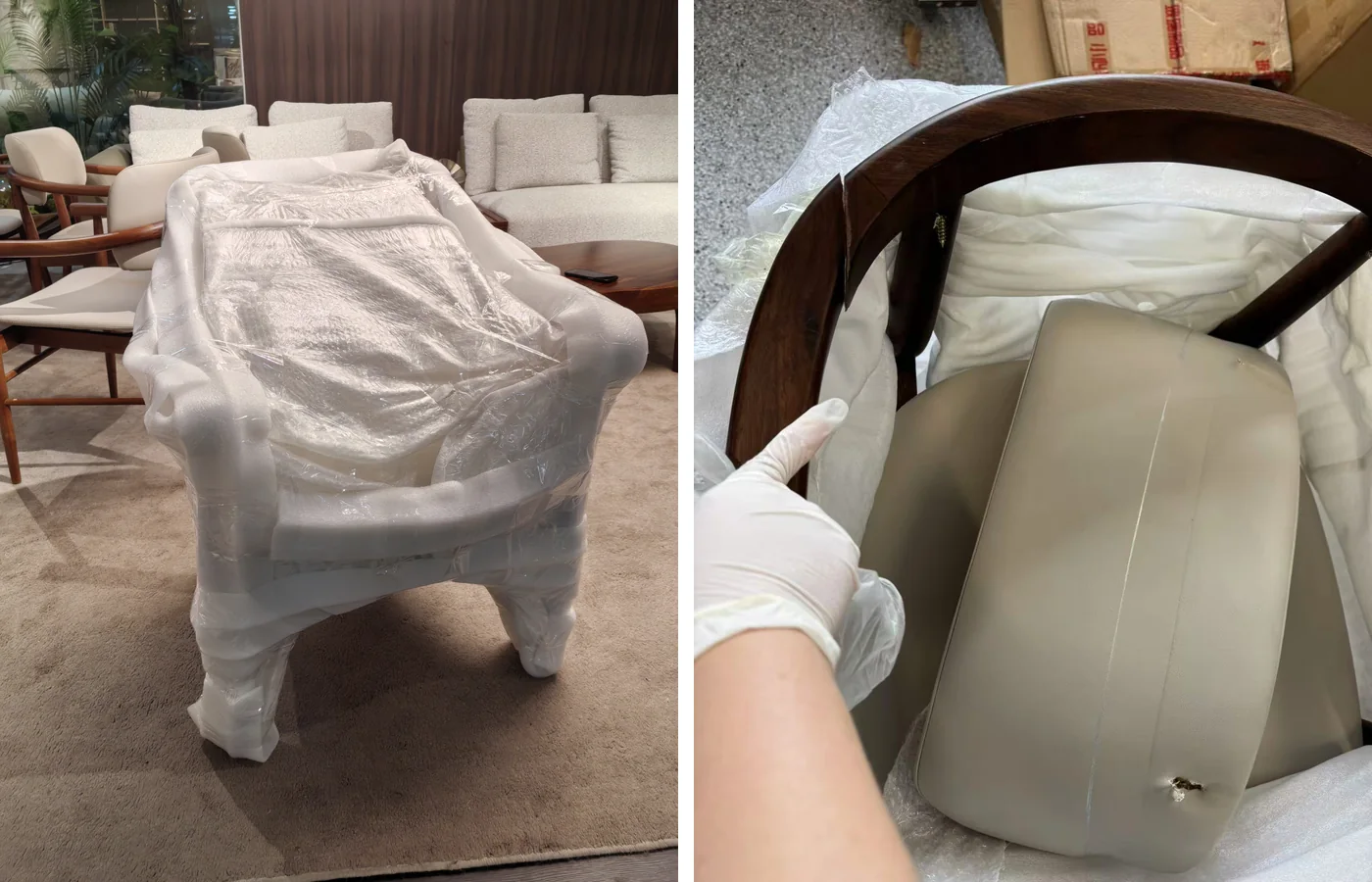
The shipment was not damage-free. A mirror and chair were damaged, and the operational record attributes those items to the original incoming packaging. Austone compensated the customer for these damaged items based on the cargo values declared on the customs-clearance invoice. This case-specific payment does not change Austone’s general position that cargo damage caused by non-compliant or inadequate packaging, or by the inherent fragility of the product, is not normally eligible for compensation.
The verified operational results were:
- customs clearance completed in two business days after arrival;
- the shipment arrived in Melbourne on 7 December 2025, clearance processing was completed on 9 December, and residential delivery and installation were completed on 15 December;
- the whole-villa furniture order was delivered before Christmas;
- the customer received regular progress updates during the inspection and sailing delay;
- unsuitable incoming timber packaging was replaced before shipment;
- electrical and branded goods requiring different handling were separated from the main furniture movement.
Practical Lessons for Furniture Importers
Provide Final Packing Data Before Booking
Furniture piece counts alone are not enough. Freight planning should use final packed dimensions, weights, materials and photographs, especially when an order includes irregular or non-stackable items.
Tell the Warehouse Before Every Parcel Is Sent
Provide a tracking number, supplier name, expected package count and cargo description before dispatch. Unannounced e-commerce parcels can create extra warehouse searching and reconciliation work.
Treat Packaging as Part of the Import Plan
Mould, dirt, bark and unsuitable timber packaging can create operational and biosecurity problems. Inspect packaging before it reaches the freight warehouse whenever possible, and allow time for replacement if it is unsuitable.
Choose the Shipping Mode Around Final Delivery
For residential furniture, compare FCL and LCL on a full door-to-door basis. Site access, unloading labour, container waiting time, unpacking, installation and waste removal can matter as much as the sea-freight rate.
Build Contingency into Deadline-Critical Shipments
An inspection can disrupt a planned sailing even when cargo and space have been prepared. A delivery deadline tied to a lease, opening date or international flight should include contingency rather than relying on the fastest published schedule.
Documents and Information to Prepare
For a mixed furniture shipment, prepare a structured shipment file that includes:
- supplier name and collection or delivery details;
- SKU-level product descriptions;
- quantity and package count;
- final packed dimensions and gross weight;
- accurate material composition;
- commercial invoice and packing list;
- packing and cargo photographs;
- identification of marble, glass, mirrors, batteries, electrical goods or branded products;
- packaging materials, including pallets, crates, frames and dunnage;
- Australian delivery address, access limitations and installation requirements.
Australia’s Department of Agriculture, Fisheries and Forestry states that imported timber, wooden articles, bamboo and related products must meet the applicable conditions in BICON. Importers should identify the actual materials and check the current product pathway before shipment. Packaging and dunnage should be reviewed separately from the furniture itself.
How Austone Can Help
Austone supports furniture shipments from China to Australia with a scope tailored to the actual order. Depending on the quotation and route, this can include warehouse receiving, cargo reconciliation, packaging checks, repacking coordination, sea-freight booking, export-document support, customs and biosecurity coordination, unpacking, residential delivery, furniture installation and packaging-waste removal.
For a shipment review, send Austone the supplier list, cargo-ready dates, SKU-level packing data, material details, photographs and Australian delivery requirements. Request a tailored furniture-shipping quote before the suppliers dispatch cargo.
Frequently Asked Questions
Can 25 CBM of furniture be shipped by LCL from China to Melbourne?
Yes, LCL may be considered, but it should be compared with FCL on a complete door-to-door basis. In this case, Austone selected LCL because the destination was a residential villa and the customer required unpacking, delivery and installation rather than unloading a full container at the property.
Why was the furniture repacked before export?
The incoming packaging included mouldy pallets, dirty timber frames and bark. Austone removed the unsuitable packaging and arranged replacement pallets, frames and outer protection based on the actual furniture.
How were goods from multiple suppliers managed?
The warehouse received the main furniture and smaller Taobao purchases, counted the cargo and helped correct incomplete invoice information. Electrical and branded items requiring separate handling were classified and shipped separately.
What caused the shipment delay?
An export inspection delayed the planned sailing by 14 days. Austone monitored the process, updated the customer and prepared the Melbourne operation so clearance and delivery could proceed quickly after arrival.
How long did the Melbourne clearance and delivery take?
For this shipment, the cargo arrived in Melbourne on 7 December 2025 and clearance processing was completed on 9 December. Residential delivery and furniture installation were completed on 15 December. These are case-specific results, not guaranteed timeframes for future shipments.
Was all the furniture delivered without damage?
No. A mirror and chair were damaged, and the case record links those items to the original incoming packaging. Austone compensated the customer based on the cargo values declared on the customs-clearance invoice. This was a case-specific resolution: as a general rule, damage caused by non-compliant or inadequate packaging, or by the inherent fragility of the product, is not normally eligible for compensation.
Conclusion
This Guangdong-to-Melbourne shipment shows why furniture logistics must be planned beyond the ocean leg. The successful parts of the operation came from identifying unsuitable packaging, reconciling mixed-supplier cargo, selecting a delivery-compatible LCL solution and preparing the destination team to act quickly after an uncontrollable inspection delay.
Importers planning a whole-home or commercial furniture shipment should involve the freight team before suppliers dispatch cargo. Early packing, material and delivery reviews create more room to correct problems before a vessel booking and customer deadline are at risk.
Sources for Regulatory Statements
- Australian Government Department of Agriculture, Fisheries and Forestry, “Importing timber, wooden articles, bamboo and related products”: https://www.agriculture.gov.au/biosecurity-trade/import/goods/timber
- Australian Government Department of Agriculture, Fisheries and Forestry, “Types of timber, bamboo and related products”: https://www.agriculture.gov.au/biosecurity-trade/import/goods/timber/types
- Australian Government Biosecurity Import Conditions system (BICON): https://bicon.agriculture.gov.au/
Need support with your next shipment?
Speak with our logistics specialists about your international freight and supply chain requirements.
Experience shows in the details before cargo moves
Industry Knowledge
Understanding cargo characteristics, supplier conditions and destination requirements shapes the right plan.
Operational Experience
Coordinating factories, documentation, carriers and arrival handling keeps complex shipments on schedule.
Professional Judgment
When conditions change, clear communication and practical adjustments protect the delivery outcome.