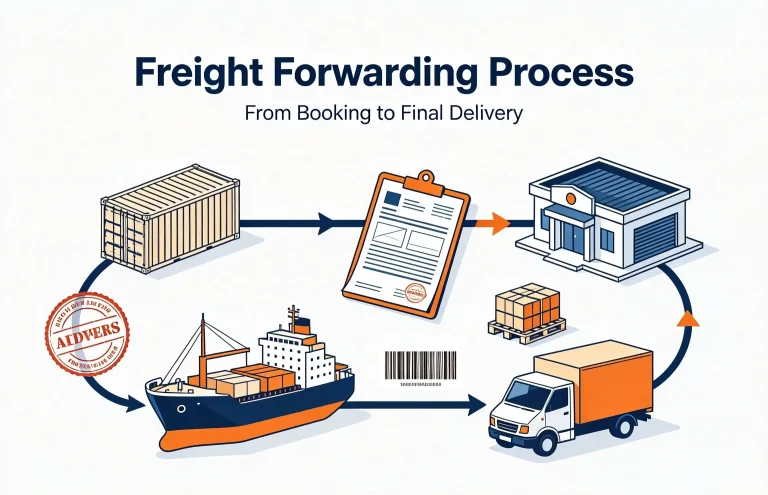
In August 2026, Austway Group’s Australia and New Zealand sea freight network loaded 121 containers representing 8,259.5 CBM of cargo. Key destinations included Sydney, Melbourne, Brisbane, Fremantle and Auckland. These are Group AU/NZ figures, rather than an Austone-only or Australia-only total.
For businesses importing from China to Australia, this edition focuses on what happens around the ocean leg: delivery performance, shipping-line documentation, biosecurity checks and the final delivery plan. The operational evidence points to a practical priority—prepare each handover before cargo reaches the next stage.
Monthly Highlights
121 containers loaded: 8,259.5 CBM across the Group’s AU/NZ sea freight network in August.
Delivery visibility: recent South China-origin records track loading through completed delivery to Sydney, Melbourne and Brisbane.
Sydney timber shipment: documentation correction, border release and biosecurity inspection required separate coordination.
September priority: review packaging, supplier information and destination access before loading.
China–Australia Delivery Performance
The recent four-week operating data supplied for this update measures South China-origin sea freight from container loading to completed delivery. It includes destination handling, rather than measuring vessel transit alone.
Destination
90% of recorded deliveries completed within
Sydney
35 calendar days
Melbourne
37 calendar days
Brisbane
40 calendar days
These are historical results for the supplied operating sample, not guaranteed transit times or a forecast for every booking. The exact four-week dates and sample sizes were not specified, so the figures should not be read as a complete August delivery audit. No equivalent delivery metric was supplied for Fremantle or Auckland.
For inventory planning, separate the vessel arrival date from the date goods are available at the receiving address. Ask for a shipment-specific plan covering release, unpacking and local delivery, especially when stock is tied to an opening, installation or customer deadline.
Sydney Timber Cargo: Track Each Release Milestone
A China-to-Sydney shipment of cabinets and other timber products in this month’s operational review required coordination across several destination-side processes. Shipping-line documentation required correction before the electronic delivery order (EDO) could be released. A Border Hold was subsequently released, followed by a biosecurity unpack inspection.
The cargo passed inspection. Coordination still needed to cover documentation, border status, biosecurity, potential storage exposure and container return.
The lesson for furniture and cabinet importers is to track customs status, biosecurity status and cargo readiness as separate milestones. A release at one stage should trigger a check of the remaining requirements before delivery is confirmed.
Shenzhen–Melbourne: Switching from Sea Freight to Air
An operational review submitted on 7 August 2026 records a Shenzhen-to-Melbourne general-cargo shipment whose sea-freight plan was disrupted by repeated customs inspections in China. The cargo entered the warehouse on 25 June and was inspected on 2 July and again on 23 July, delaying the customer’s delivery plan.
Austone kept in contact with the customer during the inspections and discussed an alternative transport plan. The team subsequently arranged for the cargo to be withdrawn from the container and returned to the warehouse, then changed the shipping channel to air freight. The operational record reports that the customer was satisfied with the response.
The practical lesson is to reassess the transport plan when disruption threatens a delivery requirement. Any switch should be agreed with the customer after reviewing cargo suitability, the available services and the revised cost.
Pre-Shipment Checks for Timber and Mixed-Supplier Cargo
Australia’s Department of Agriculture, Fisheries and Forestry states that imported timber and related products must meet the applicable BICON import conditions. Importers are responsible for compliance. This is standing guidance checked on 8 September 2026, rather than a newly announced August rule.
For timber and mixed-supplier shipments, prioritise these checks before consolidation:
Confirm product descriptions, materials, quantities and supplier details against the commercial invoice and packing list.
Review photographs and the condition of pallets, crates and timber frames; allow time to replace unsuitable packaging.
Check the relevant product and packaging requirements before shipment.
Confirm receiving-site access, unloading arrangements and any installation or waste-removal requirements.
The aim is to identify avoidable problems while cargo is still at origin. A packaging correction or missing supplier detail is easier to address before it affects a booked movement and the destination delivery plan.
September 2026 Operational Priorities
Austone’s September focus is on pre-shipment risk management, Australia-side execution and industry-specific logistics for furniture, lighting, apparel and other regular importers. Cargo checks, customs and biosecurity coordination, warehousing and delivery need to be planned as connected stages.
For the next order, share supplier cargo-ready dates, final packing data and the required delivery date early. Identify the stages that depend on third-party release or inspection, and agree who will provide each update. This gives the freight team a clearer basis for sequencing collection, consolidation and destination handling.